
Floors That Hold Up Under Real Conditions
Flooring Installation in Manassas for Homes with Damaged Subfloors and Moisture Issues
Water-damaged subfloors and basement moisture are common in DMV homes built between the 1980s and 2000s, and those conditions affect which flooring materials perform reliably. Hardwood warps in damp basements, tile cracks over flexing plywood, and vinyl planks telegraph every subfloor imperfection. James Lambert Remodeling and Repair, LLC installs new flooring across kitchens, bathrooms, basements, and full-home projects in Manassas, starting with substrate assessment before material selection happens. Flooring is often part of a larger remodel scope, coordinated with plumbing, electrical, and finish carpentry work across Fairfax County, Loudoun County, and Prince William County.
The process begins with evaluating the existing subfloor for water damage, deflection, and levelness. If the substrate isn't sound, no flooring material will perform as expected. Material recommendations are tied to the space's moisture exposure, traffic patterns, and the home's age—what works in a second-floor hallway fails in a basement with seasonal humidity swings. Subfloor prep includes leveling compound application, moisture barrier installation, or plywood replacement as needed, and the flooring installation is scheduled around other trades during multi-scope remodels.
Schedule a property evaluation to assess your current subfloor condition and discuss material options suited to your space.
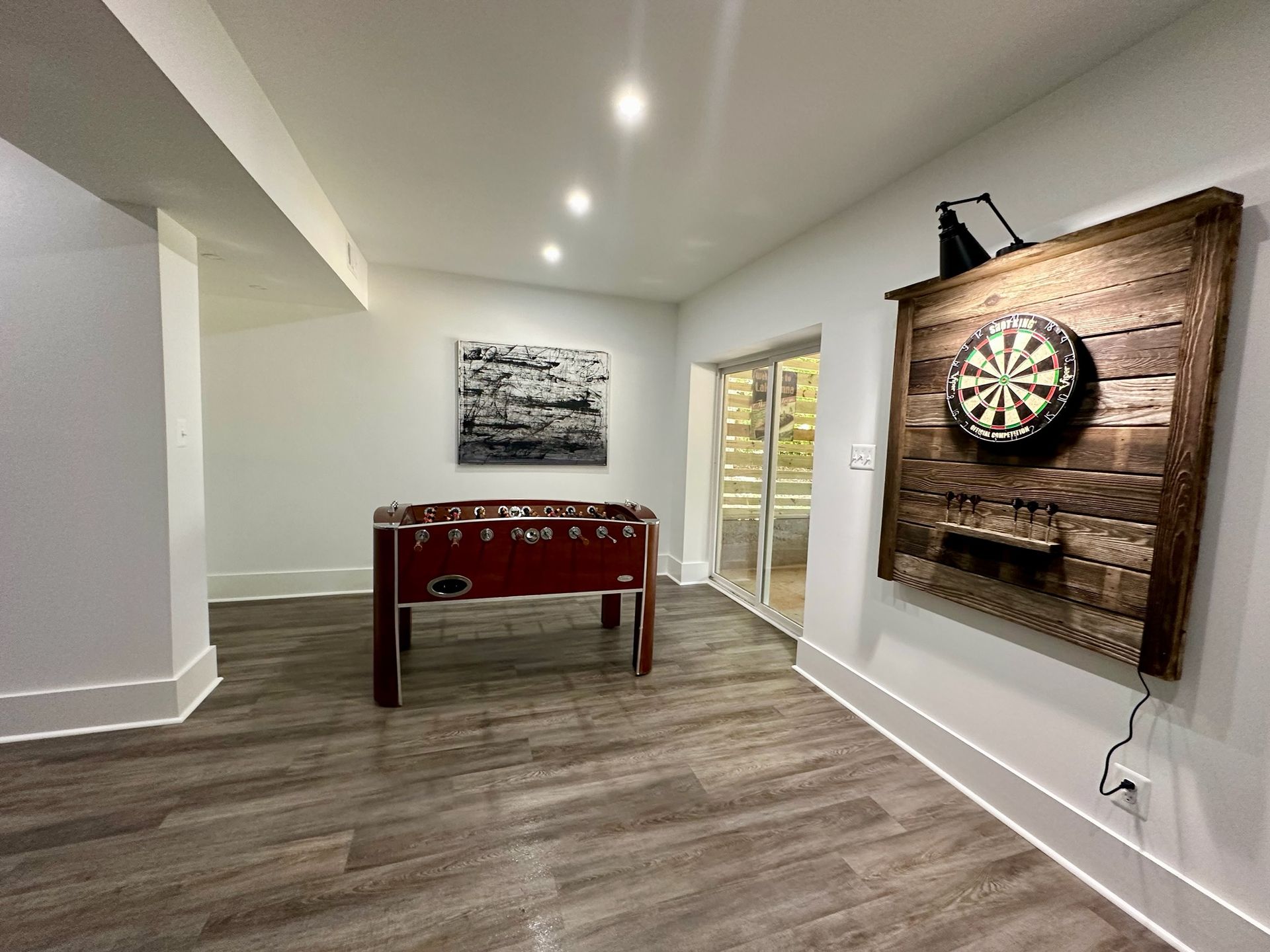
You notice the floor is level when you roll a chair across it or set furniture in place. Transitions between rooms are flush and secure, not raised or loose. If hardwood was installed, the finish coat is uniform without streaks or missed spots. If tile was installed, grout lines are consistent in width, and edges align at doorways. The flooring sits flat without gaps at baseboards, and there's no hollow sound when you walk across high-traffic areas.
Older DMV homes often have subfloor issues that only become visible after carpet or old vinyl is removed. Those issues—sagging joists near plumbing penetrations, water stains from past leaks, or OSB that has delaminated from moisture exposure—are addressed before new flooring goes down. Flooring integrated into concurrent multi-trade bathroom and kitchen projects means substrate prep happens on schedule without waiting for a separate contractor to assess and repair the subfloor.
Material selection is guided by what holds up in Northern Virginia's climate. Basements with fluctuating humidity need materials that tolerate moisture movement. High-traffic kitchens need finishes that resist scuffing and denting. Bathrooms need waterproof backing under tile. The material choice is part of the design-build process, not an afterthought once cabinets are installed.
Common Questions Before Flooring Installation
Homeowners frequently ask these questions when planning flooring projects, particularly when substrate condition is unknown.
How do you know if the subfloor needs repair?
Deflection, water stains, soft spots, and squeaking are indicators. The substrate is evaluated before material selection, and any necessary repairs are included in the project scope so the flooring performs as expected long-term.
What flooring works best in Manassas basements?
Material choice depends on basement moisture levels. Engineered hardwood tolerates humidity swings better than solid hardwood, luxury vinyl plank handles moisture without warping, and tile requires proper underlayment to prevent cracking. A moisture test determines which materials are appropriate.
How much does flooring installation cost in Manassas?
Cost depends on material choice, subfloor condition, and square footage. Homes built before 2000 often require more prep work than newer construction, which affects labor pricing. Material selection guidance is provided during the initial consultation.
Can flooring be installed while other remodel work is happening?
Flooring is typically one of the last trades to complete, scheduled after plumbing, electrical, and drywall work finishes. Coordination with other trades prevents damage to new flooring and keeps the project timeline efficient.
What's the difference between solid hardwood and engineered hardwood?
Solid hardwood is milled from a single piece of wood and can warp in humid conditions. Engineered hardwood has a plywood base with a hardwood veneer, which resists moisture movement and performs better in basements and kitchens. Both can be refinished, but engineered hardwood has fewer refinishing cycles due to the thinner wear layer.
Flooring installation is integrated into the full design-build workflow used by James Lambert Remodeling and Repair, LLC across Manassas and surrounding counties. Request a project estimate to review material options and substrate preparation requirements for your specific space.